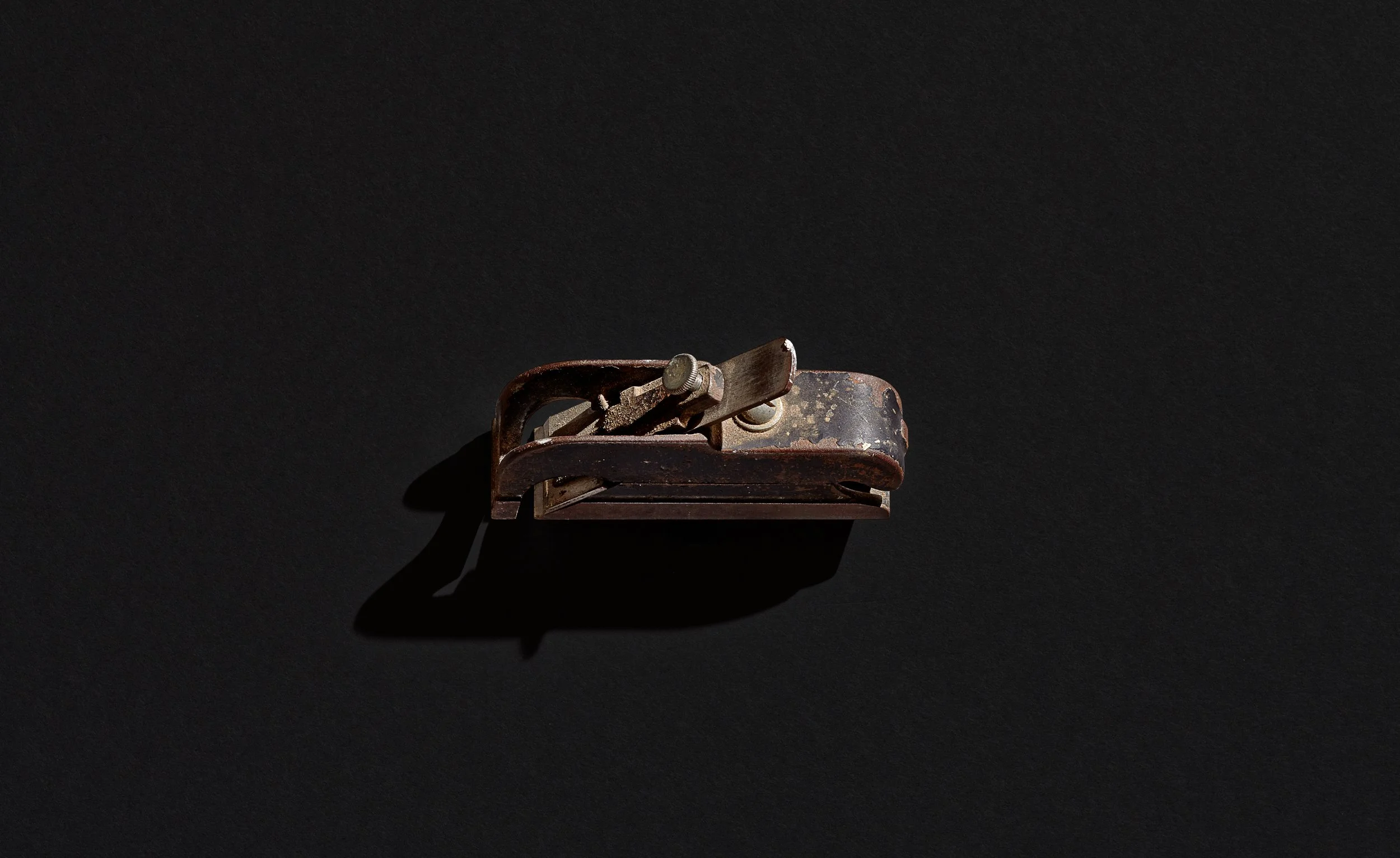
My grandfathers were dedicated, hard-working, ethical role models, passionate about the work they did and a huge influence in my life. Neither of them got past the 8th grade, but that did not stop them from seeking out their own version of higher education. They learned to make a living with their hands. This project is my tribute to Eugene Temple and Wilmer Stevenson, highlighting the tools they used with their hands.
Wilmer Stevenson

Wilmer Stevenson working a lathe at Castaloy.
Wilmer Stevenson, my maternal grandfather, (known to family and friends as Steve) lost his job at the hosiery mill in Pennsylvania due to the Depression. He and his new bride, my grandmother, headed west to Los Angeles seeking new opportunities which he found at another mill, Mission Hosiery. Only a couple months after getting his new job the workers decided to strike forcing Wilmer to take a job washing windows. The strike ended after 9 months, the workers having gained nothing but lost wages for their trouble.
Soon after World War II started, there was more need for troop and materials transport than hosiery so he went to work at the shipyards. It was during this time he wanted to learn a trade and started attending night school at Glendale High School to learn machining. Upon gaining his new skills as a machinist, he went to work for Castaloy Corp. making tools and parts for the war effort. As the war ended, so did the need for materials supporting the troops, and he eventually went back to work as a knitter in the Theme Hosiery mill.
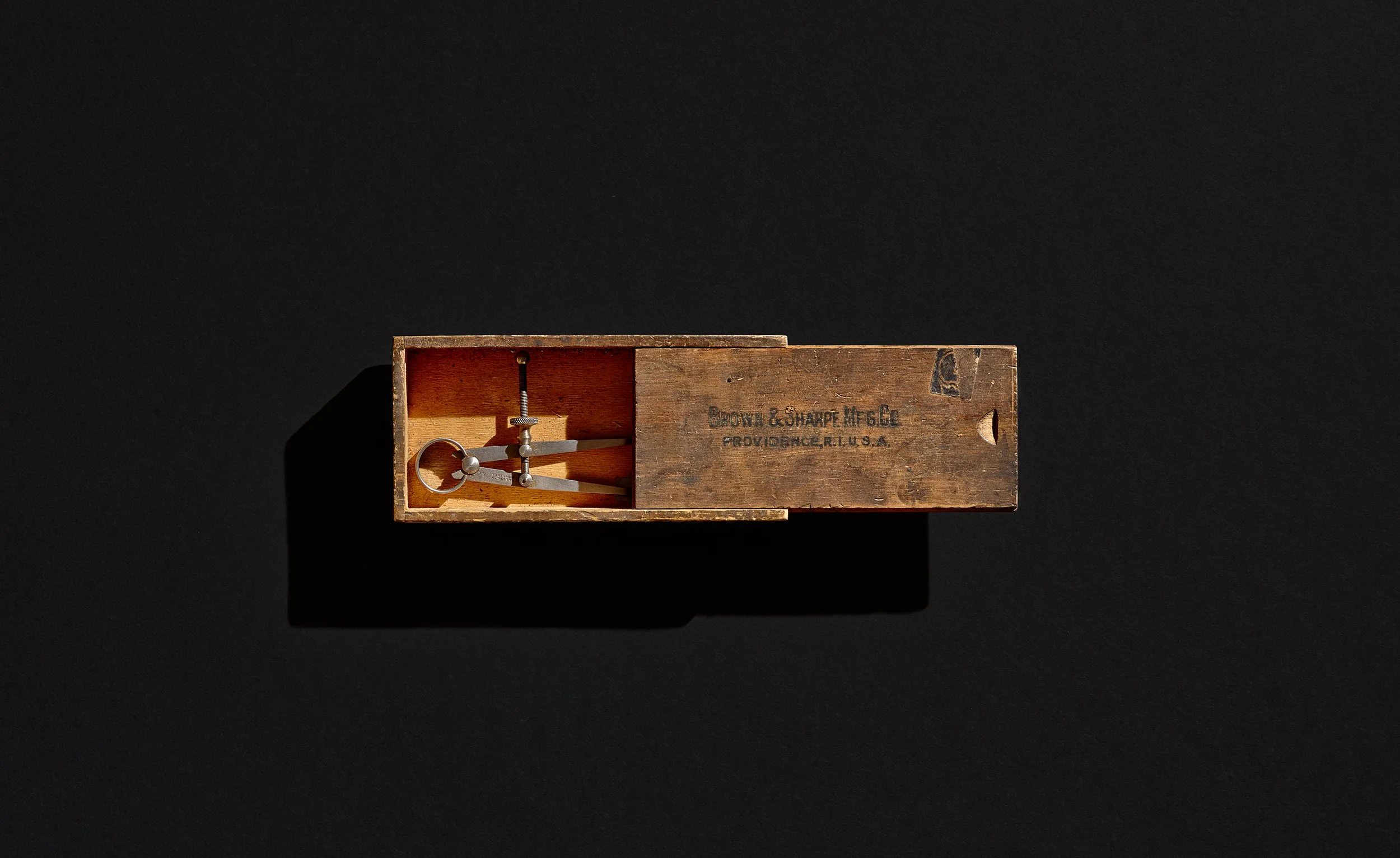
In 1952, the family moved to Simi Valley and bought a chicken ranch. At about this same time, he went to work for Rocketdyne as a machinist. Rocketdyne was located on ‘the hill’ over Simi Valley and this is where they did their engine tests as part of the R&D department. He was making parts never made before, for rocket engines that had never existed before. In time, Wilmer became a lead man during 2nd and graveyard shifts. The parts he made were components of the larger rocket engines used to propel our first forages into space. He worked on all manner of large machines from day to day, but his micrometer was one of his most prized tools.
Wilmer retired in 1971.
Below are photographs of Wilmer’s tools. He proudly earned and saved his own money to purchase them.



eugene temple

Eugene Temple (noted as number 3) with his fellow workers at the cabinet shop in Los Angeles. This includes his best friend Val (number 1), his brother Louis (number 2), and his brother Art (number 4).
Eugene Temple, my paternal grandfather, was a motorman on the LA rapid transit system and briefly owned a laundromat in South-Central L.A. before entering the world of carpentry at a cabinet shop in Los Angeles. Due to the nature of his work, he and his family moved more than 20 times before finally settling in Simi Valley. By that point, he was working carpentry full time and joined the union. Among the projects he worked on were the Topanga Plaza in Canoga Park and Atomics International on De Soto, also in Canoga Park. Due to health problems in 1961, he could no longer handle the daily rigors of carpentry and retired. His work with wood was far from over.
My grandmother was full of ideas about changing their home, and Eugene was more than willing to take on the projects. By the early 1970’s they had moved again, this time 3 hours north to Creston, CA. Immediately, he added a room onto the home just for my crib when my parents came to visit. The upstairs got a half-bath, a door was removed, a tree house was built for the grandchildren, and more.
Even the places they rented weren’t safe. One house had been converted from a two-bedroom to an illegal three-bedroom. He converted it back. During a kitchen remodel at our home in Atascadero, CA he was a daily presence, even placing a penny inside the wall as a kind of copper time capsule. Eugene did this often on his projects. In 1975 they moved again to Shandon, CA, where much of his woodworking was in the form of small projects. He built dollhouse furniture out of popsicle sticks including rocking chairs. He constructed and lettered a new sign for the town church. Eugene was very driven to complete projects, perhaps taking less pleasure in the process than he could. I know I get that from him.
The tools featured here are a small sampling of the vast trove Eugene acquired over the years.